What Happens After Someone Fills Out Your Contact Form?
Part 3 of The Small Business Communication Series
A lot of small business owners put a contact form on their website and think the job is done.
The form is there.
The customer can fill it out.
The message gets sent somewhere.
So everything should be good, right?
Not always.
Because the contact form is not the finish line.
It is only the beginning of the conversation.
The Customer Took Action
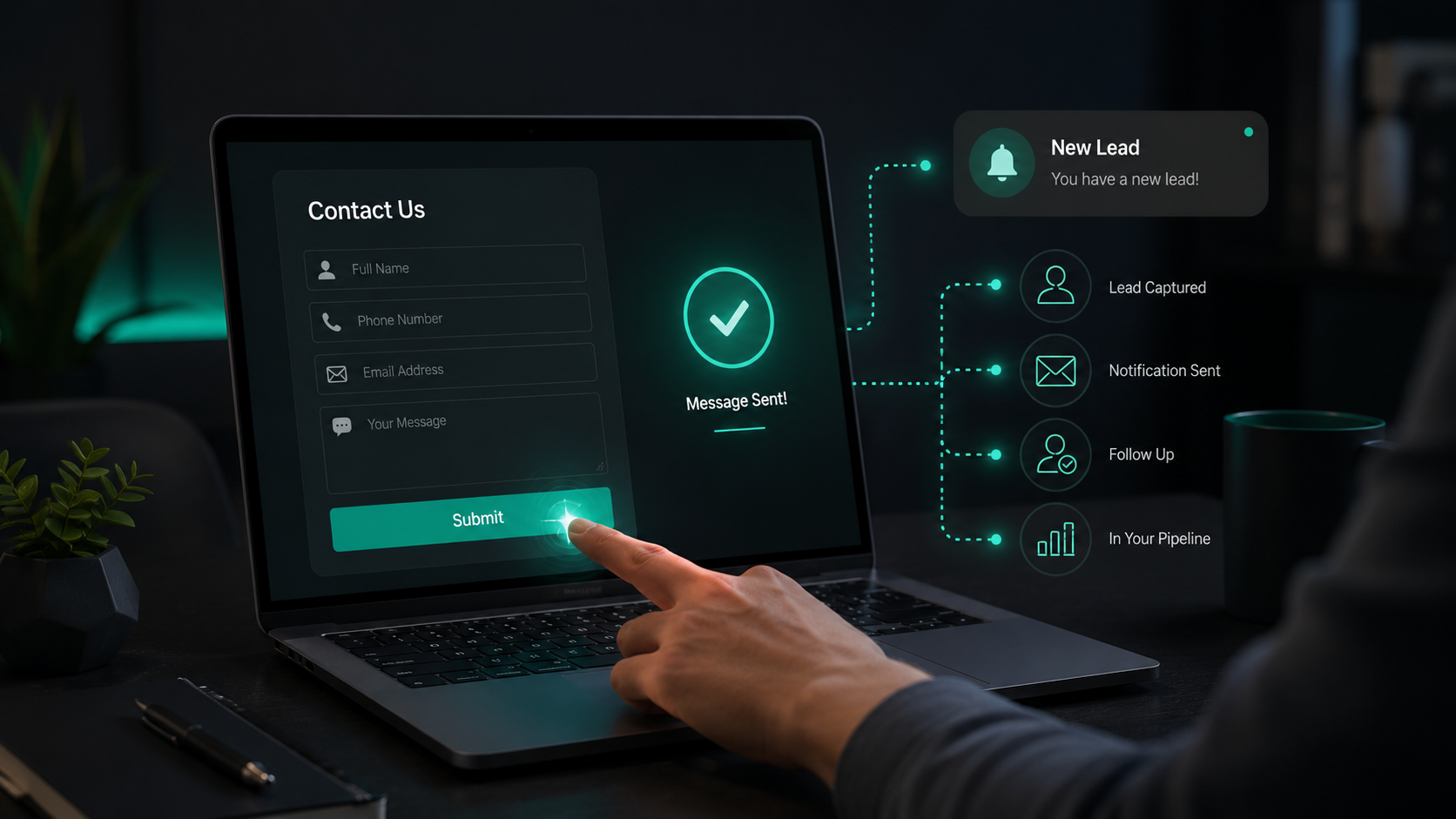
When someone fills out a contact form, that means they already did something important.
They found your business.
They looked around your website.
They decided they might need your service.
Then they took the next step and gave you their information.
That is a real opportunity.
But that opportunity can disappear quickly if the follow-up is slow, missed, or handled manually with no real system behind it.
Many businesses do not lose leads because the customer was not interested.
They lose leads because nobody responded fast enough.
A Form Submission Is Not a Closed Deal
This is where a lot of businesses accidentally drop the ball.
A contact form may collect the customer’s name, phone number, email, and message.
But then what happens?
Does someone get notified right away?
Does the customer receive a confirmation?
Does anyone text them back?
Does the lead get added to a CRM?
Does someone follow up if they do not answer?
Or does the form just send an email that gets buried in an inbox?
That is the part many business owners do not think about until they realize leads have been slipping through the cracks.
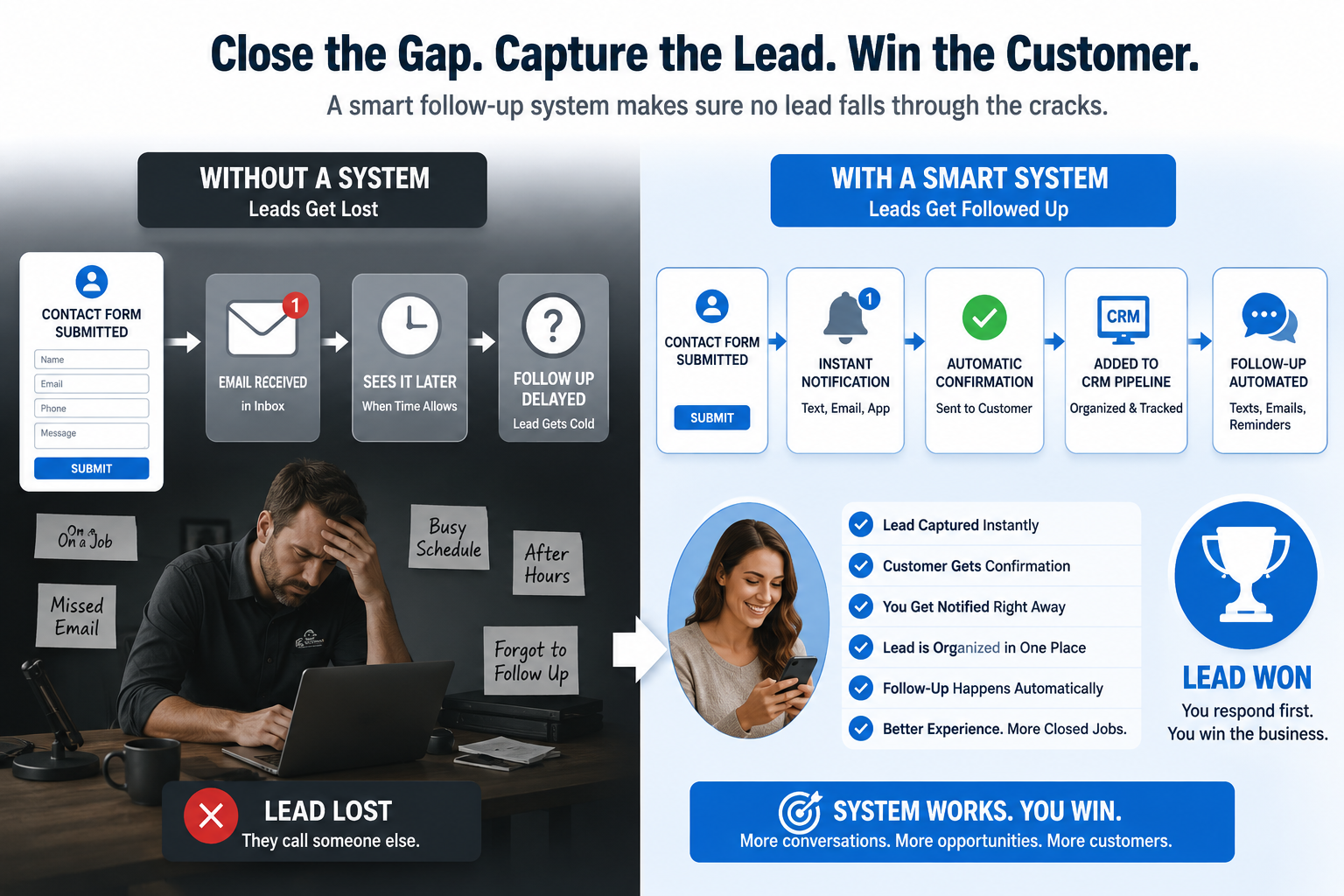
The Problem With Manual Follow-Up
Manual follow-up sounds simple.
Someone fills out a form, and the business owner or office staff reaches out.
But in the real world, things get busy.
You may be on a job.
You may be driving.
You may be with another customer.
You may be closed for the day.
You may not see the email until hours later.
And by then, the customer may have already contacted another business.
That does not mean your business did anything wrong on purpose.
It just means the follow-up process depended too much on someone being available at the perfect time.
And that is not always realistic.
Speed Matters More Than Most People Think
Customers today expect quick responses.
They are used to getting confirmations, updates, texts, and reminders almost instantly.
So when someone fills out a form and hears nothing back, even for a short time, they may start wondering if the business received it at all.
That silence creates doubt.
And once doubt starts, the customer may keep searching.
They might submit another form somewhere else.
They might call a competitor.
They might book with the first business that responds.
Many times, the business that responds first has the best chance to win the customer.
Not always because they are better.
But because they made the next step easier.
What Should Happen After the Form Is Submitted?
A smart follow-up system should do more than just send an email notification.
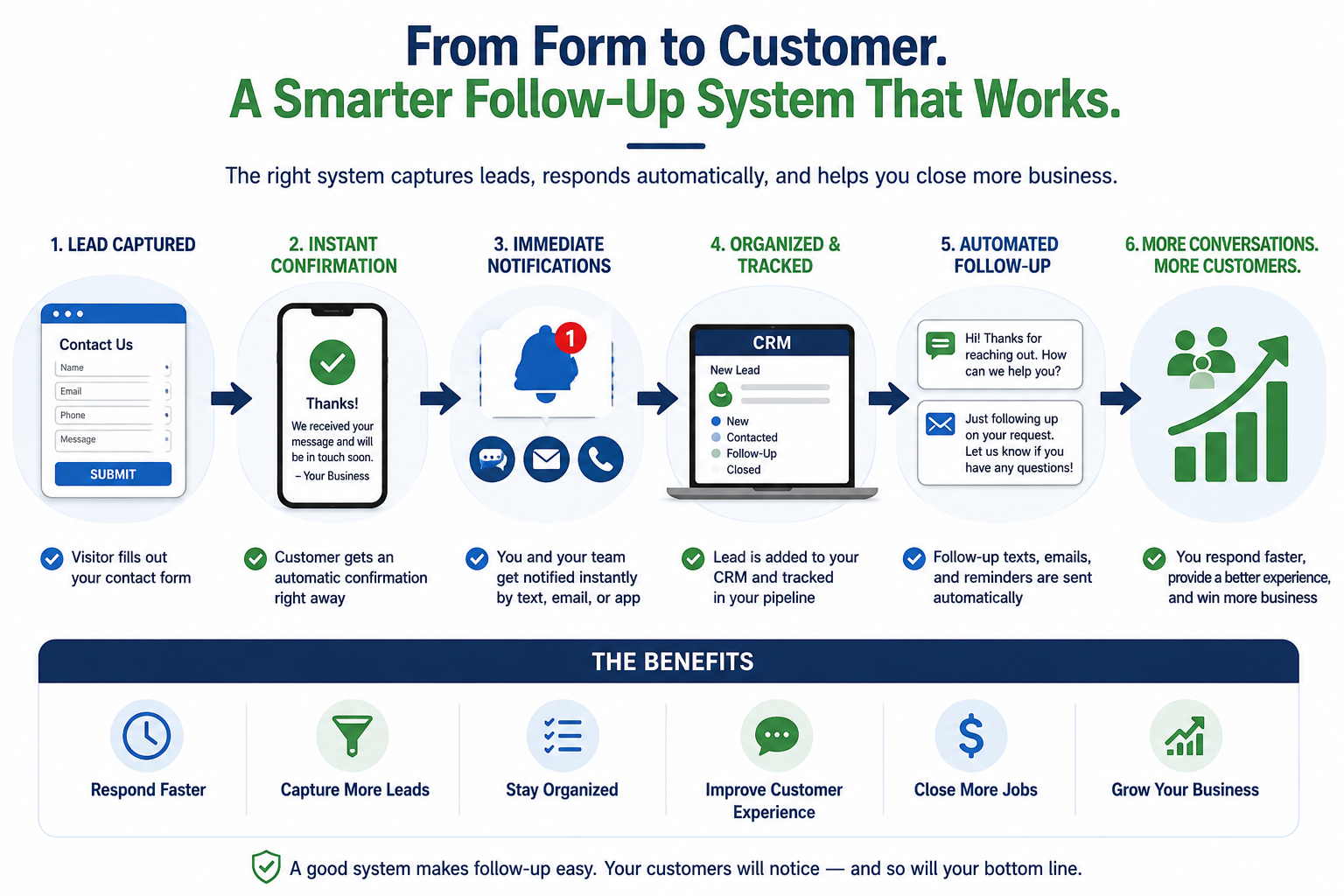
When someone fills out a form, several things should happen quickly.
The customer should know their request was received.
The business should be notified right away.
The lead should be organized in one place.
A follow-up message should go out automatically.
The conversation should be easy to continue.
And the business should have a clear way to track what happened next.
That is the difference between having a contact form and having a real communication system.
The Customer Should Get Confirmation
One of the simplest things a business can do is send an automatic confirmation message.
Something as simple as:
“Thanks for reaching out. We received your request and someone will follow up with you shortly.”
That one message lets the customer know their form did not disappear into nowhere.
It gives them confidence that the business is aware of their request.
It also makes the business look more professional and organized.
This does not replace a real conversation.
It simply keeps the customer engaged while the business follows up.
The Business Should Be Notified Immediately
The business also needs to know that a new lead came in.
Not hours later.
Not when someone remembers to check the inbox.
Right away.
That notification could be sent by text, email, app notification, or all of the above.
The goal is simple:
Make sure the right person knows there is a new opportunity.
Because if the business does not know about the lead quickly, the customer may already be moving on.
The Lead Should Not Live Only in an Email Inbox
This is another common issue.
A form submission comes in by email, and that email becomes the only record of the lead.
That may work when there are only one or two inquiries.
But as the business grows, email alone becomes messy.
Messages get missed.
Follow-ups get forgotten.
Multiple people may not know who replied.
There is no clear view of where the lead stands.
A better system keeps the lead organized.
That means the customer’s information, message, follow-up status, and conversation history should be easy to find.
That is where a CRM or lead pipeline becomes valuable.
It helps the business see who is new, who has been contacted, who needs follow-up, and who became a customer.
Follow-Up Should Not Depend on Memory
Most small business owners are busy.
They are not sitting at a desk all day waiting for forms to come in.
They are running jobs, answering calls, helping customers, handling scheduling, checking invoices, and trying to keep the business moving.
So follow-up cannot depend only on memory.
A good system can help by sending reminders, follow-up texts, emails, or notifications when a lead still needs attention.
That way, even if the first attempt does not connect, the lead is not forgotten.
Because sometimes the customer does not answer the first call.
Sometimes they miss the first text.
Sometimes they need a reminder.
The business that follows up consistently has a better chance of winning the job.
Automation Does Not Replace the Business Owner
Some people hear the word automation and think it means replacing the personal side of the business.
That is not the point.
Automation does not replace the owner, the staff, or the relationship with the customer.
It supports them.
It helps make sure the first response happens quickly.
It helps make sure the customer feels acknowledged.
It helps make sure the lead is captured and organized.
It helps make sure the business does not forget to follow up.
The personal conversation still matters.
But automation helps make sure that conversation actually happens.
The Real Issue Is the Gap
The problem is not the contact form itself.
The problem is the gap between the customer submitting the form and the business responding.
That gap is where leads are lost.
That gap happens after hours.
It happens during busy workdays.
It happens on weekends.
It happens when emails get buried.
It happens when there is no clear follow-up process.
And for many small businesses, that gap is costing real money.
The customer was interested.
The business had a chance.
But the system was not strong enough to protect the opportunity.
A Better Website Should Do More Than Look Good
A good website should not only explain what the business does.
It should help move the customer toward action.
But once the customer takes action, the website should connect to a system that helps the business respond.
That may include:
Contact forms.
Text follow-up.
Email confirmations.
Internal notifications.
CRM organization.
Appointment scheduling.
AI chat assistance.
AI receptionist support.
The website gets the customer to raise their hand.
The communication system helps make sure someone is there to answer.
Small Businesses Do Not Need More Stress
A lot of business owners already have enough going on.
They do not need more things to remember.
They need better systems that help them stay organized and responsive without adding more pressure.
That is why smart follow-up matters.
It gives the customer a better experience.
It gives the business owner more control.
It helps prevent good leads from disappearing.
And it helps create a smoother path from first contact to booked customer.
Final Thought
A contact form is important.
But it is not enough by itself.
The real question is:
What happens after someone fills it out?
If the answer is, “We get an email and try to respond when we can,” then there may be opportunities getting missed.
But if the form connects to a system that confirms, notifies, organizes, and follows up, then that business has a much better chance of turning interest into actual customers.
Because in today’s world, the businesses that follow up quickly and consistently are often the ones that win.
Better Solutions AI
Better Solutions AI helps small businesses create smarter communication systems that capture leads, respond faster, organize follow-up, and reduce missed opportunities.
From smart websites and AI chat assistants to AI receptionist systems and automated follow-up, the goal is simple:
Help small businesses stop losing leads after the customer reaches out.


